

Before You Measure Anything, Ask Your Executives to Predict the Results
A leadership team was working through a restructuring list. One name on it belonged to an employee whose role, on paper, overlapped with two others. Cutting it looked like a clean efficiency.
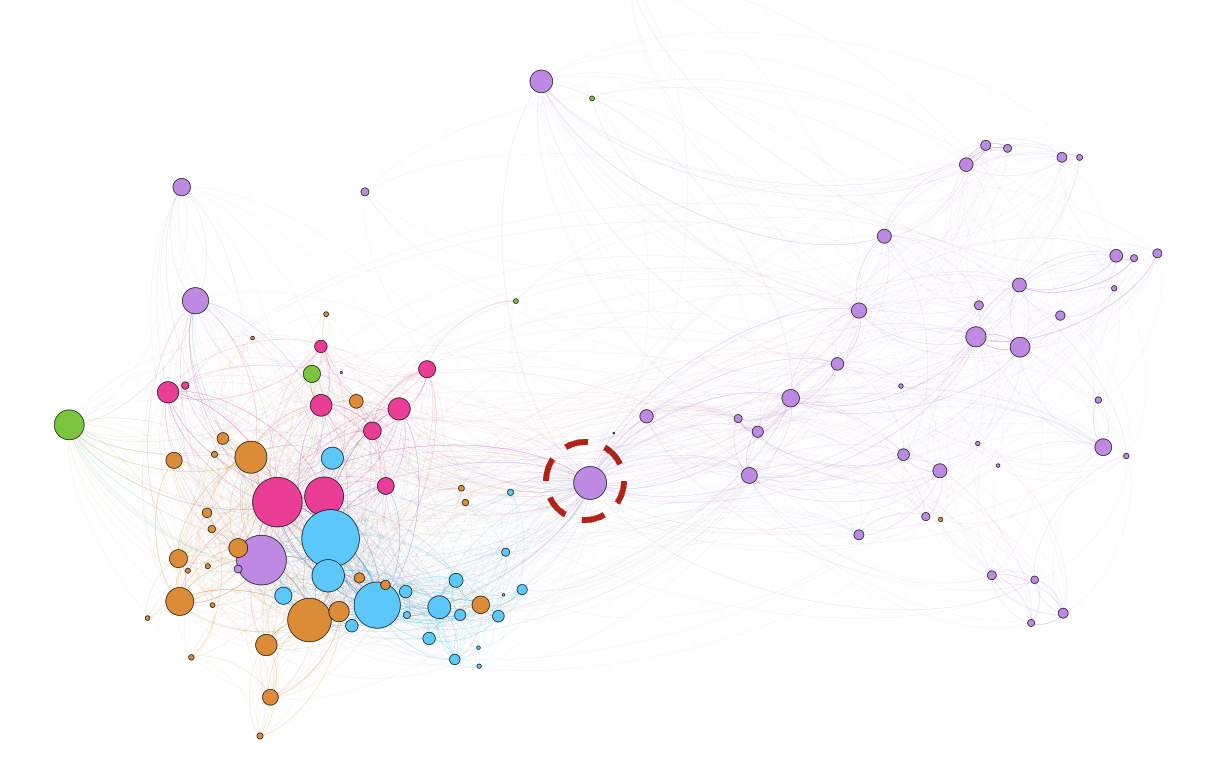
Then the network data came back.
She accounted for 90% of the connections between the product team and the sales team. Almost every piece of information that moved between the two functions moved through her. Removing her role would have quietly severed the link between what the company built and what it sold.
The leadership team was working carefully from the organization it could see. The more interesting question is what would have happened if, before any data was collected, each of them had been asked to write down the five or six people information actually flows through. Her name would almost certainly have been missing from every list. That absence, recorded in advance, is the finding. It shows exactly where leadership's picture of the organization and the organization itself had drifted apart.
Why the return on people data stays abstract
Executives are right to ask what they get from an employee survey program, whether that is an annual engagement survey, a quarterly pulse, or a broader organizational diagnostic. Most answers they receive are unsatisfying. The report arrives, the findings are reasonable, a few initiatives follow, and a year later it is hard to say what changed because of the data and what would have happened anyway.
The problem is usually framed as a measurement problem: better metrics, tighter links to business outcomes, a cleaner dashboard. I think the problem sits earlier. The return on people data comes from decisions it changes, and you can only show that a decision changed if you know what leadership believed before the data arrived. Most organizations never capture that. By the time the results are presented, every executive has quietly updated their view, and the findings feel either obvious or debatable. Nobody can point to the moment the organization learned something.
Writing the predictions down first solves that. It turns a report into a comparison, and a comparison is something a leadership team can act on.
Five predictions worth asking for
These work before any employee survey, and they work best as short, individual conversations with each executive before it launches. Ask each person separately, record their answers, and do not share them across the team until the readout.
1. When a decision stalls here, who usually unblocks it?
Leaders tend to name a person or a role. The prediction tests whether decision authority has concentrated in one or two people, and whether someone such as a Chief of Staff is doing bridging work that never appears on the org chart.
2. Which five or six people does information actually flow through?
This asks for the people things go through, regardless of seniority. It is the most direct test of leadership's mental model, and it feeds straight into retention planning. The people you would least want to lose are often the ones leadership does not name.
3. When your most critical work needs several functions at once, how does that coordination happen?
The answer reveals whether leaders believe there is a structural mechanism, such as a standing forum, a program office, or a defined handoff, or whether it depends on particular individuals. When a few informal integrators turn out to be carrying most of that load, their departure becomes a structural risk leadership had not priced in.
4. Where do you think leadership has the least visibility into how work gets done?
This asks executives to predict their own blind spots, which makes it the most revealing question on the list. Some answers point to how the work is structured, others to where people sit. Asking employees the mirror question, who they need more access to, shows whether the blind spots leadership names are the ones employees actually feel.
5. A year from now, what would you most want to see as evidence that the organization is working better?
This defines the return on the work before the work begins, in the executives' own terms, and it becomes the frame for the readout. It also tends to expose misalignment early. When we asked a related question in one leadership team, what winning looks like at the end of the year, no two executives gave the same answer. Some said sell the product, some said sell the technology, and others said find the right partner. Each answer was defensible. Together they explained why priorities kept shifting underneath the teams below them.
Notice which predictions your survey can check
Once the predictions are written down, compare them with the survey you plan to run. The instrument often covers less of the list than leadership assumes.
An engagement survey speaks well to the fifth question. It will show whether people feel the organization is getting better, whether trust is moving, whether priorities feel clearer. The first four are harder. Who unblocks decisions, which people information runs through, whether coordination rests on structure or on a few individuals, where leadership's view of the work runs out: these describe how work moves, and a survey about how people feel reaches them only indirectly.
That is useful to know before the results arrive. Some teams add questions or a second source of data. Others hold those predictions open and treat them as the questions this cycle will not settle. Either way, the readout is more honest when everyone knows which predictions the data could actually test.
Running the readout around the gaps
When the data comes back, lead with the comparison instead of the scores. A single slide that places each executive's predictions next to what the data shows will do more work than a full deck of dimension averages. In one session, a slide showing leaders' divergent answers side by side held the room for 45 minutes on its own.
The gaps tend to fall into three kinds:
Confirmed predictions. Leadership already knew, and the data gives them permission to move faster. These are the easiest wins and the least surprising, so move through them quickly.
Surprises. Leadership predicted one thing and the data showed another. The connector nobody named, the team everyone assumed was isolated that turned out to be central, the bottleneck that sat somewhere other than expected. These are where the value of the exercise concentrates, and they deserve most of the time in the room.
Splits. Executives disagreed with each other before the data arrived. These are often the most important findings of all, because they describe misalignment at the top that the rest of the organization has been absorbing for months. Resolving a split takes a leadership conversation the team has been avoiding, and the data gives them a reason to have it.
What this changes for the CEO
A CEO who runs the exercise this way gets three things a standard report cannot provide. The first is a clear record of what the organization learned, which makes the return on the work concrete: decisions that changed, roles that were protected, reporting lines that moved. The second is an honest read on how well the leadership team understands its own organization, which is useful information in its own right. The third is a baseline for next year. The answers to the fifth question already describe what success should look like, so when the survey runs again, the team can measure against a standard it set for itself. It can also see whether its predictions improved, which is one of the better signals that leadership is getting closer to how the work actually gets done.
The predictions take a short conversation with each executive. They cost almost nothing to collect, and they change how every finding that follows is read. Most organizations skip this step because it feels informal, yet it is the step that makes everything after it measurable.
This is where execution readiness starts: with an accurate picture of how the organization actually carries work, held by the people responsible for directing it. The survey provides the data. The predictions show leadership how far their picture has drifted, and where to look first.
About the Author
Victor Bilgen is the Founder of BridgeLayer Analytics. He spent 13 years at the McChrystal Group running diagnostics and network analysis for Fortune 1000 executives, and built BridgeLayer because the gap between organizational insight and organizational action kept showing up in the same place: the work that comes before the recommendations. He is a contributing author to The Social Capital Imperative (Oxford University Press, 2025).
